

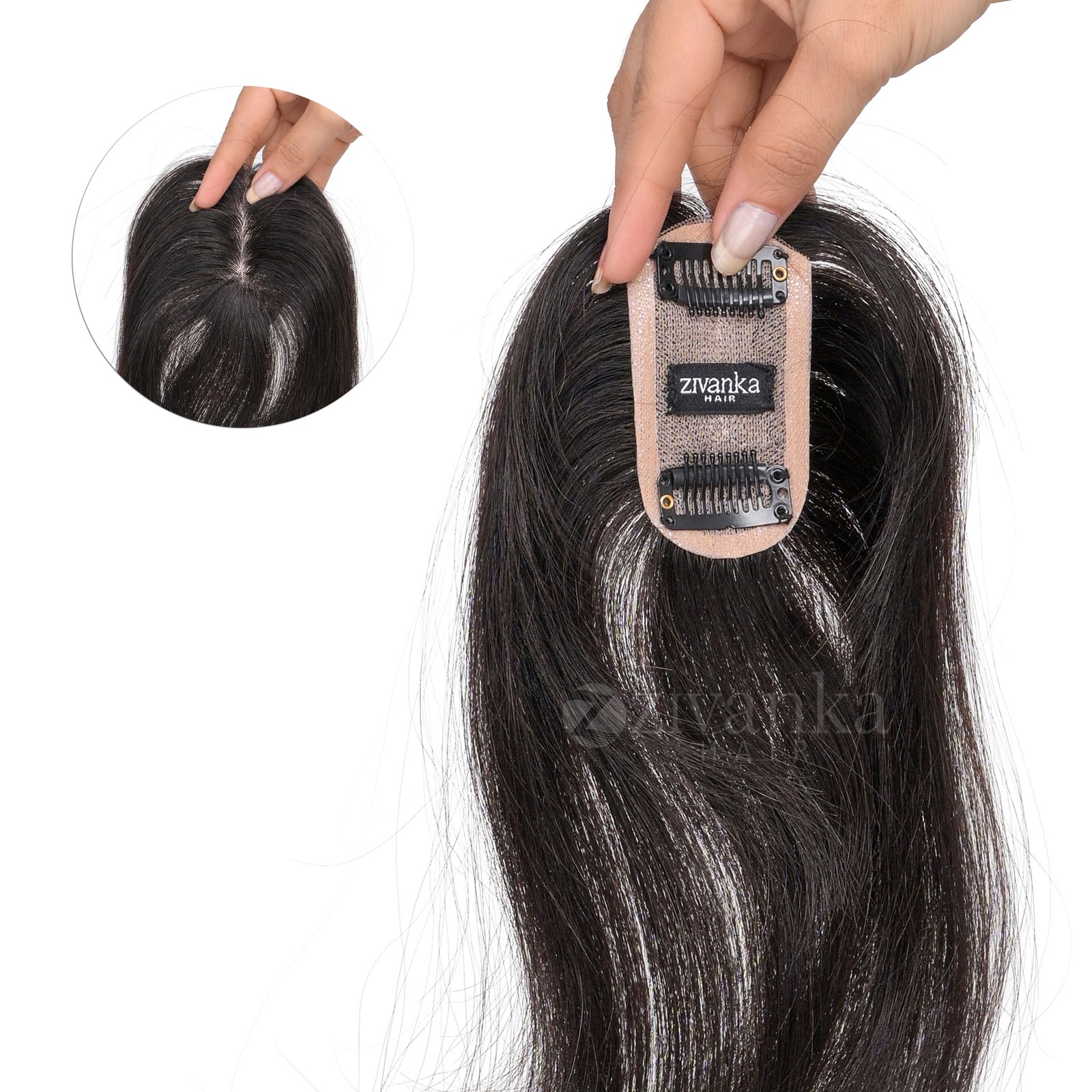
“How long will these last?” is the most rational question a hair extension buyer can ask — and the industry answers it worst, because honest numbers depend on hair grade, wear pattern and care, and marketing prefers a single optimistic figure. Here are the real timelines, what moves them up or down, and how to know when a piece has genuinely reached the end.
The Honest Lifespan Table
- Virgin Remy clip-ins, occasional wear (1-2×/week): 2-3 years, often more
- Virgin Remy clip-ins, frequent wear (4-5×/week): 1-2 years
- Virgin Remy toppers and patches, daily wear: 11-12 months
- Halo extensions, regular wear: 2+ years (least handling stress of any type)
- Non-Remy “human hair”, any wear: 2-4 months before matting sets in
- Synthetic fibre: 4-8 weeks of good looks, then permanent frizz
The spread between the first line and the last is the entire argument of our Remy vs synthetic comparison: grade decides the ceiling; care decides where under that ceiling you land.
Why Daily-Wear Pieces Age Faster
A topper worn every day accumulates roughly 350 wears a year — brushing, sun, friction against dupattas and car seats, styling heat. A clip-in set worn twice weekly sees a hundred. Since extension hair cannot regenerate, lifespan is really a budget of wears, spent faster or slower. That’s also why the same Zivanka hair grade honestly quotes different lifespans for different products — 11-12 months of daily topper wear is a larger total than 2 years of weekend clip-ins.
The Five Factors That Move the Needle
- Washing frequency — the biggest one. Washing every 15-20 wears instead of weekly can add a year to a set’s life
- Heat habits — 150-170°C occasionally is fine; 200°C daily halves a piece’s life
- Storage — hanger and carrier bag versus loose drawer is the difference between smooth and matted month six
- Sleeping habits — sleeping in clip-ins is the single fastest destroyer of extension hair
- Product choices — sulphates strip, alcohol dries, oils on wefts loosen knots; the right four products cost little and pay yearly
All five habits are detailed in our complete care guide — fifteen minutes of reading that typically doubles a set’s working life.
The Ageing Curve: What to Expect When
Months 1-6: the honeymoon
Full shine and swing with near-zero effort. The only job is building the right habits while everything is easy.
The middle stretch: honest maturity
Ends dry slightly, detangling takes a minute longer, shine softens from new to natural. Monthly masks and an occasional drop of argan oil hold the line beautifully — this stage is most of a piece’s life, and well-kept hair here still passes as your own without question.
The final season: managed decline
Tangling accelerates, ends stay rough after masks, wefts may thin visibly. A stylist’s dusting trim and a revival wash buy months; when revival stops working, the budget of wears is spent.
Retirement Signs: When It’s Actually Over
- Tangles return within minutes of detangling
- Ends feel rough immediately after a deep-conditioning mask
- The weft itself sheds noticeably or has visibly thinned
- Colour has dulled unevenly beyond what shine products fix
- You’ve started avoiding wearing it — the honest human signal
Frequently Asked Questions
Does Zivanka’s 3-month guarantee mean the hair lasts 3 months?
No — the guarantee covers quality defects (construction, shedding, misdescription), not lifespan. The lifespans above are what the hair delivers with reasonable care; the guarantee is your protection that you received what was promised.
Can I extend life by rotating two sets?
Meaningfully, yes — two sets in rotation each see half the wears and outlast two sets bought sequentially, because ageing also pauses in storage. Daily topper wearers benefit most from a second piece.
Do darker or lighter shades last differently?
The hair is the same; maintenance differs. Lighter and balayage shades show dust and product sooner (more washes → more wear), and any professionally coloured piece ages a little faster than an uncoloured one.
What’s the smartest first purchase for longevity?
The grade, the storage kit, and the knowledge: a Virgin Remy piece, a hanger and carrier bag with it, and the care guide read once. That combination — not any secret product — is what three-year sets have in common.
The Rotation Strategy in Practice
Serious daily wearers converge on the same system: two pieces, alternating. Piece A works Monday-Wednesday while piece B rests; they swap Thursday. Each piece sees half the wears, half the washes, half the styling heat — and because degradation compounds (dry ends tangle more, tangling roughens ends), halving the load more than doubles each piece’s usable life. The rotation also solves wash-day logistics permanently: something is always dry, styled and ready. Start with one piece; when it enters its honest maturity around the half-year mark, buy its partner — the first piece then ages in half-time exactly when it needs the relief.
A Real Timeline: One Set, Well Kept
Month 1: new set, habits installed — hanger bought, wash reminder set. Month 6: first dusting trim with a regular haircut; set still reads as new to everyone else. Month 12: monthly masks now non-negotiable; shine natural rather than showroom. Month 20: a clarifying wash and revival mask after a product-heavy wedding season — full recovery. Month 30: ends staying rough, tangling within the hour; the set retires to “braid duty,” where woven styles hide tired ends beautifully for months more. Month 36: replaced — after roughly three hundred wears at under ₹30 each. That’s not a lucky set; that’s an ordinary Virgin Remy set that was never slept in, never boiled, and never stored loose in a drawer.
Bottom Line
Buy the grade that can last, spend its wears deliberately, and retire it with your money’s worth thoroughly extracted. Extensions aren’t consumables unless you buy consumable hair. Start with Zivanka’s Virgin Remy collection — free shipping across India, COD, 3-month guarantee.