

Finding more hair on the pillow, a parting that keeps widening, a ponytail that feels lighter every month — female hair thinning is far more common than the silence around it suggests, and it deserves better answers than “just oil it more.” This guide walks through the real causes, the treatments that exist, when to see a doctor, and the instant solutions that restore your look while everything else takes its time.
A note before we start: this article shares general information, not medical advice. For diagnosis and treatment decisions, please consult a dermatologist.
First: Recognise Your Pattern
Female thinning rarely looks like male baldness. It usually shows up as one of three patterns, and identifying yours narrows down both cause and solution:
- The widening part: more scalp visible along your parting line — the classic first sign of female-pattern hair loss
- Crown thinning: the top of the head loses density; often noticed first in photos or under bright lights
- Diffuse shedding: hair thins evenly everywhere — the ponytail shrinks but no single spot looks bare; typical of stress- and health-triggered shedding
The Common Causes
Genetics (female-pattern hair loss)
The most common cause worldwide. If your mother, aunts or grandmothers experienced thinning, your follicles may be genetically sensitive to normal hormone levels, gradually miniaturising over years. It progresses slowly and responds best to early intervention.
Hormonal shifts
PCOS, thyroid imbalance, and menopause all disturb the hair growth cycle. Post-partum shedding deserves its own mention: two to four months after delivery, many women shed dramatically as hormone levels reset. It’s alarming — and almost always temporary, recovering within a year.
Stress and illness (telogen effluvium)
A high fever, surgery, crash dieting, intense emotional stress — any major shock can push a large share of follicles into their resting phase at once, with heavy shedding two to three months later. The trigger passes; the shedding follows it; regrowth typically begins within months.
Nutrition gaps
Iron deficiency is especially relevant for Indian women, alongside vitamin D, B12 and protein shortfalls. These are testable and fixable — one reason a doctor’s visit pays for itself.
Traction and styling damage
Years of tight buns, braids and ponytails pull persistently on the same follicles — thinning the temples and crown. Caught early, traction loss reverses when the tension stops; continued for years, it can become permanent.
When to See a Dermatologist
- Shedding that lasts beyond six months
- Visible scalp appearing quickly, or in patches with defined edges
- Itching, pain, redness or scaling along with the loss
- Thinning alongside other symptoms — fatigue, irregular cycles, weight changes
A dermatologist can test for deficiencies and hormonal causes, and prescribe evidence-based treatments — typically topical minoxidil, and in suitable cases oral medication, PRP sessions or supplements. What these all share: they need six to twelve months to show visible results, and they work best the earlier you start.
The Gap Nobody Talks About — and How to Bridge It
Here’s the honest timeline problem: treatments take months to years, but you have a life now — meetings, weddings, photographs, mirrors. The distress of visible thinning is real (and chronic stress itself worsens shedding — a genuinely unfair loop). This is exactly the gap that modern hair pieces close, instantly and without interfering with any treatment:
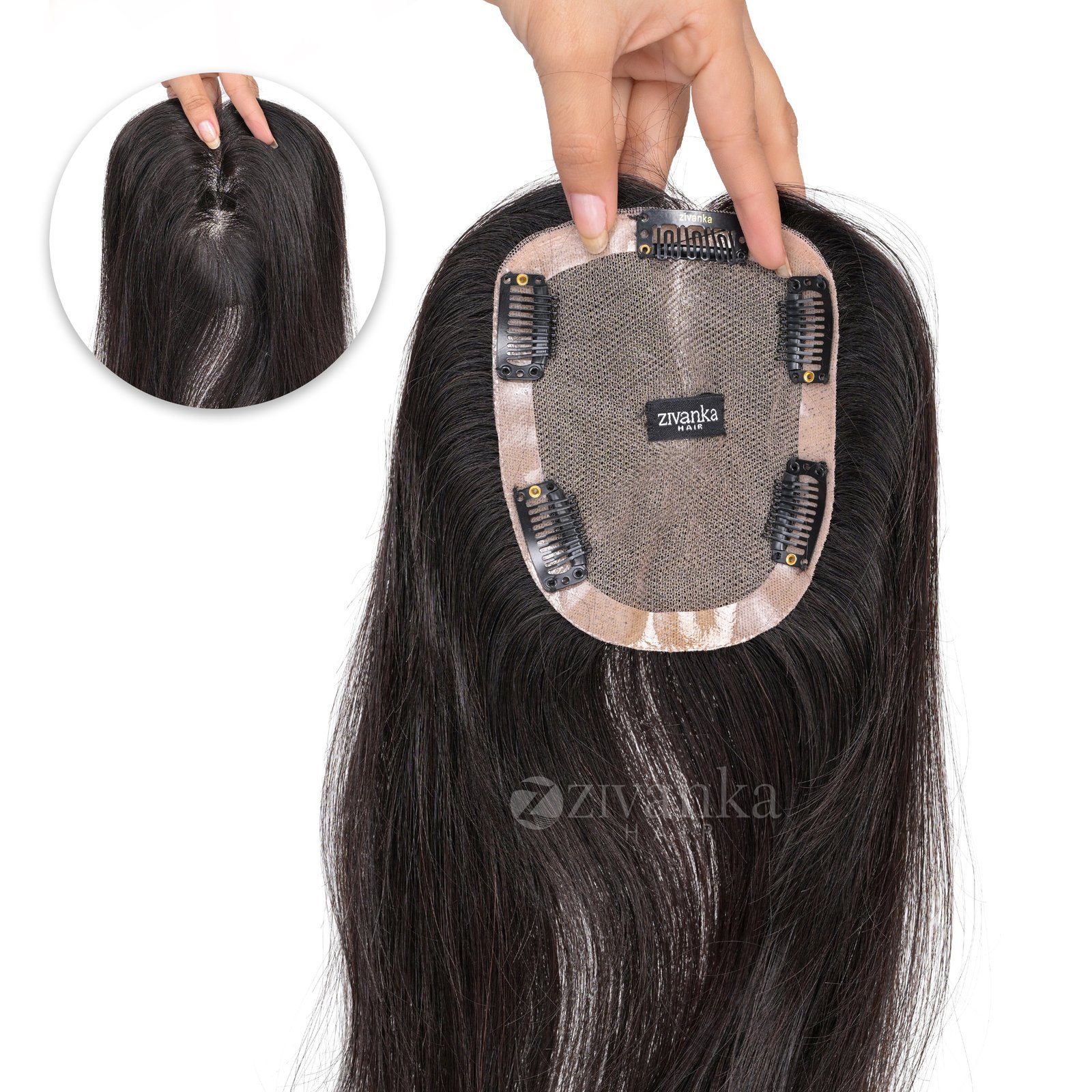
- Hair toppers — cover the part and crown, the two most common thinning zones. Our complete topper guide explains how they work
- Invisible patches — targeted coverage for defined spots
- Volumizers — for diffuse thinning with no bare zone, they thicken what you have
- Fine-hair clip-in extensions — when the issue is overall slimness rather than visible scalp
All of these come off at night, leaving your scalp free for treatments. Cover the symptom, treat the cause — simultaneously.
Protecting the Hair You Have
- Loosen daily hairstyles — rotate partings, alternate tight and loose days
- Wash gently with sulphate-free shampoo; scalp health is follicle health
- Cut heat styling frequency; air-dry when you can
- Eat protein at every meal; get iron and vitamin D checked rather than guessing
- Sleep on silk or satin if breakage adds to the problem
- Be sceptical of miracle products — if it promises regrowth in weeks, it’s marketing
The Emotional Side Is Not Vanity
Hair carries identity in a way that’s easy to dismiss and hard to overstate — in India especially, where thick hair is tied to ideas of beauty, health and even auspiciousness. Women routinely describe thinning as watching a part of themselves disappear. If that’s you: your distress is legitimate, you’re in enormous company, and the options today — medical and cosmetic — are genuinely better than they’ve ever been. The women you see with enviable hair? A meaningful share of them are wearing some of it. You’d never know. That’s rather the point.
Frequently Asked Questions
How much daily hair fall is normal?
Losing 50-100 strands a day is the normal growth cycle at work. Worry signals are a sustained increase over your baseline, or visible scalp where there wasn’t any.
Will wearing a topper or extensions worsen my thinning?
Clip-based pieces removed nightly don’t create the constant tension that damages follicles. Choose light pieces, rotate clip positions, never sleep in them — and they’re safe even on thinning hair.
Does post-partum hair loss grow back?
In the great majority of cases, yes — shedding peaks around month four and recovers over the following year. A topper or volumizer bridges the visible gap meanwhile.
Is female thinning reversible?
It depends on the cause. Deficiency-, stress- and hormone-triggered shedding usually recovers once the cause is addressed. Genetic pattern loss can be slowed and partially improved with treatment, especially started early — which is why seeing a dermatologist sooner beats later.
Your 90-Day Action Plan
Weeks 1-2 — understand: photograph your parting and crown in daylight (your objective baseline), book a dermatologist appointment, and get basic bloods checked — iron, ferritin, vitamin D, B12, thyroid. Guessing is the enemy; most “mystery” shedding has a testable cause.
Weeks 3-4 — decide and start: begin whatever treatment your doctor recommends, fix the diet gaps your tests revealed, and audit your styling for daily tension. If visible thinning is affecting your confidence, choose your bridge — a topper, patch or volumizer — using our choosing guide.
Months 2-3 — hold the routine: treatments show nothing at this stage, and that’s normal — the growth cycle is simply slow. Re-photograph monthly in the same light rather than judging by the mirror’s daily moods. Wear your cover piece guilt-free; it’s the reason you can be patient. Reassess with your dermatologist around month six with photos in hand.
Take the Next Step
Two appointments are worth making this month: one with a dermatologist to understand your cause, and one with your mirror to decide how you want to look while treatment does its slow work. For the second, explore Zivanka’s hair thinning solutions — handcrafted, undetectable, and designed for exactly this journey. Free shipping across India, COD available.